Soil Aeration in Tampa
Why Soil Compaction Is a Serious Problem for Tampa Trees
Soil compaction is one of the most common — and most underdiagnosed — causes of tree decline in urban Tampa landscapes. When soil particles are pressed tightly together, pore space collapses. That pore space is where roots find oxygen, where water infiltrates after rainfall, and where beneficial soil microorganisms live. Without it, roots suffocate slowly, nutrient uptake drops, and trees become progressively more vulnerable to disease and pest pressure.
Tampa’s predominant soil type — fine-grained sandy loam with occasional clay layers — is particularly susceptible to compaction under urban conditions. Parking lots, sidewalks, and building foundations create compaction zones that extend far beyond what is visible at the surface. Additionally, construction activity is a leading cause of sudden compaction in previously healthy root zones, often triggering a decline cycle that does not become visible until two to four years after the damage occurred. Therefore, waiting for symptoms to appear is rarely a viable strategy.
What’s Included in Our Soil Aeration Service
Each service begins with an on-site root zone assessment to evaluate tree health and soil compaction. Then, treatment needs are determined, including fertilization or organic amendments if required.
Next, compacted soil is loosened using air spade technology without damaging roots. In addition, organic matter is incorporated to improve soil structure and moisture retention. A mulch layer is applied to protect and maintain results.
Furthermore, condition notes are provided after each visit to document treatments and findings. Finally, follow-up assessments are scheduled based on tree recovery and site conditions.

For faster or immediate service during business hours, please call us directly at 813-837-3992
Soil Aeration as Part of a Broader Tree Health Strategy
Soil aeration delivers its strongest results when it is part of a coordinated plant health care plan rather than a one-time intervention. According to University of Florida IFAS Extension, urban trees in Florida consistently perform better under long-term soil management programs that address compaction, nutrition, and moisture retention together — because these factors interact directly with each other in the root zone environment.
At JAWS Tampa Tree Service, our ISA Certified Arborists assess each tree’s soil conditions, root zone boundaries, and overall health before recommending a treatment plan. For trees adjacent to construction activity, we combine aeration with root pruning and Tree Protection Zone installation. For established landscape trees showing canopy thinning or premature leaf drop, aeration paired with ISA-guided plant health care protocols is often the most effective path to recovery available without resorting to removal.
The Benefits of Soil Aeration for Tampa Trees
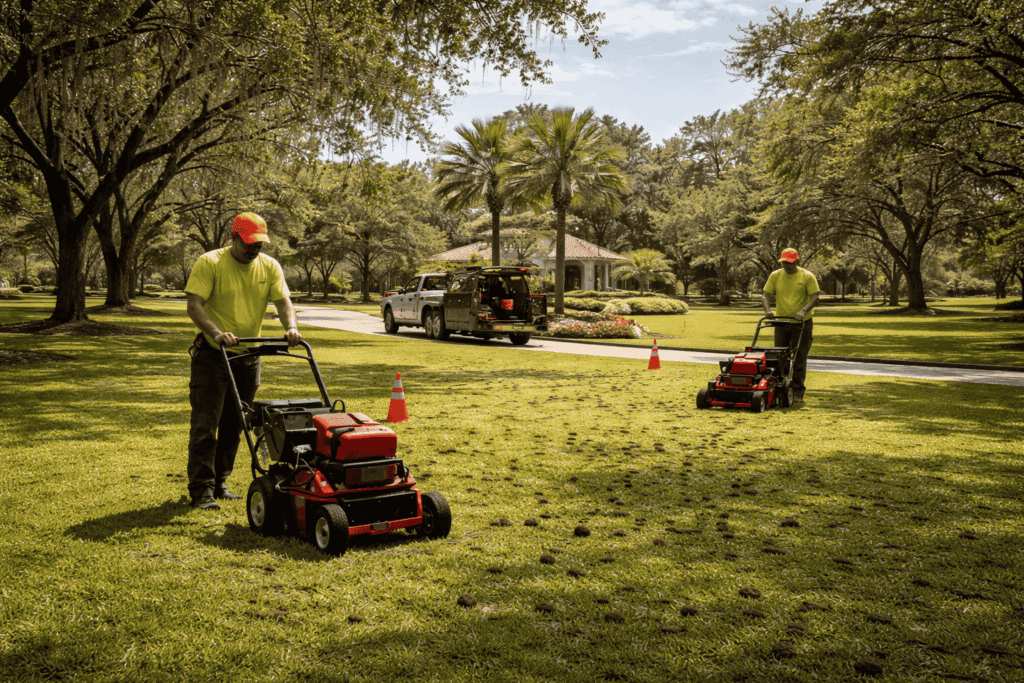
Soil aeration improves root function by allowing air, water, and nutrients to move freely. As a result, tree health, growth, and natural defenses are strengthened.
In addition, soil structure is improved, which helps reduce runoff and supports beneficial organisms. Therefore, a healthier and more stable landscape is maintained.
For commercial properties, costly tree removals are often avoided. Thus, investing in soil health is more cost-effective than replacing mature trees.
- Increased safety around homes and buildings
- Early detection of disease or structural issues
- List Better landscape aesthetics and curb appeal
- Long-term property protection
- Ultimately, expert arborist care ensures every tree contributes positively to your landscape.
Schedule a Root Zone Assessment Today
If your trees are showing signs of decline — thinning canopy, early leaf drop, stunted growth, or branch dieback — compacted soil may be the cause. JAWS Tampa Tree Service has helped Tampa Bay property owners and commercial clients restore struggling trees for 38 years, and soil aeration is one of the most reliable tools in our plant health care program. Call us today at (813) 837-3992 or contact us online to schedule a root zone assessment and find out what your trees actually need.
Why Choose JAWS Tampa Tree Service for Soil Aeration
JAWS Tampa Tree Service has been treating compaction and soil health issues in the Tampa Bay area for 38 years. That depth of experience matters because soil aeration is not simply a mechanical procedure — it requires a qualified arborist to assess root zone conditions accurately, identify the true cause of decline, and determine whether aeration alone is sufficient or whether it needs to be combined with fertilization, root pruning, or other plant health care treatments to achieve the result your trees need.
Our Service Process
A clear service process helps property owners make confident decisions. Each step focuses on safety, efficiency, and long-term tree health.
1. Root Zone Evaluation
First, the tree’s condition is assessed, including soil compaction, root health, and environmental factors affecting growth.
2. Compaction & Issue Identification
Next, areas of compacted soil and related stress factors are identified to determine treatment needs.
3. Aeration & Treatment Plan
Then, a tailored aeration plan is developed, including air spade work, organic amendments, and additional treatments if required.
4. Ongoing Care & Monitoring
Finally, follow-up visits and monitoring are provided to support soil recovery and long-term tree health.
Explore Additional Tree Services
Complete tree care often involves more than routine maintenance alone. Our team therefore provides professional guidance to help property owners make informed decisions about tree health, safety, and liability. For example, Expert Tree Consultations help identify potential risks, evaluate tree conditions, and recommend effective long-term care solutions. In addition, Tree Insurance Consultations provide detailed assessments and documentation to support insurance claims and property protection needs. Therefore, visit our main Tree Services Tampa page to explore the full range of professional tree care solutions.
Frequently Asked Questions
How do I know if my Tampa tree needs soil aeration?
Common signs that compaction is affecting your tree include thinning or yellowing canopy, stunted annual growth, early leaf drop, branch dieback from the tips inward, and soil that feels hard and does not absorb water well after rain. Trees near driveways, sidewalks, construction areas, or high-traffic zones are especially at risk. An assessment by an ISA Certified Arborist can confirm whether compaction is the underlying cause.
What is the difference between air spade aeration and standard mechanical core aeration?
Mechanical core aeration removes plugs of soil using rotating tines — a method designed for turf grass that can sever feeder roots and cause additional stress to trees already in decline. Air spade aeration uses pressurized air to fracture compacted soil without any cutting action, making it far safer and more effective for established trees. It also allows soil amendments to be incorporated directly into the loosened root zone during the same treatment visit.
How much does soil aeration cost for a tree in Tampa, and how long does it take?
Cost depends on tree size, root zone area, and whether additional treatments like fertilization or organic amendment incorporation are included. Most single-tree aeration treatments are completed in two to four hours. We provide a written quote after an on-site assessment so you know exactly what is involved before any work begins. For commercial properties with multiple trees, we offer program pricing that reduces per-tree cost significantly.
Is soil aeration safe for trees that are already stressed or in decline?
Yes — when performed correctly using air spade technology, soil aeration is one of the safest interventions available for stressed trees. Because the air stream does not cut roots, it poses minimal additional stress risk even to severely compacted or declining trees. Our ISA Certified Arborists evaluate each tree’s condition before treatment and adjust the approach accordingly to ensure the process supports recovery rather than adding further stress.
Does Tampa’s sandy soil really need aeration, or is compaction mainly a problem in clay-heavy regions?
Tampa’s sandy soils compact readily under urban pressure — parking lots, foot traffic, and construction equipment create compaction layers even in sandy profiles. Fine-grained sandy loam loses pore space quickly when subjected to repeated loading, and once compacted, it does not recover on its own without mechanical intervention. Tampa urban trees are frequently found growing in severely restricted root zones that look deceptively normal at the surface but are oxygen-depleted just inches below grade.
Our ISA Certified Arborists use air spade technology rather than mechanical alternatives, because we prioritize root safety over convenience. We also bring genuine familiarity with Tampa’s specific soil types, seasonal moisture patterns, and the compaction pressures that urban development in Hillsborough County creates — context that shapes every treatment recommendation we make. Additionally, our work is documented, so you always have a record of what was done, when it was done, and what to watch for going forward.
If your trees are struggling and you are not sure why, start with a root zone assessment. Contact JAWS today and let’s find out what your soil is telling us.