Diagnosis and Treatment of Diseased Trees in Tampa: Catch It Before the Canopy Falls
Signs Your Tree Is Sending a Warning
A sick tree rarely falls without warning. It communicates its problems; you just need to know how to listen. We visit properties across Tampa Bay every week where the homeowner reports the tree “looked fine last month.” Often, the problem was simply quiet, not absent.
What signs should prompt you to call for an arborist?
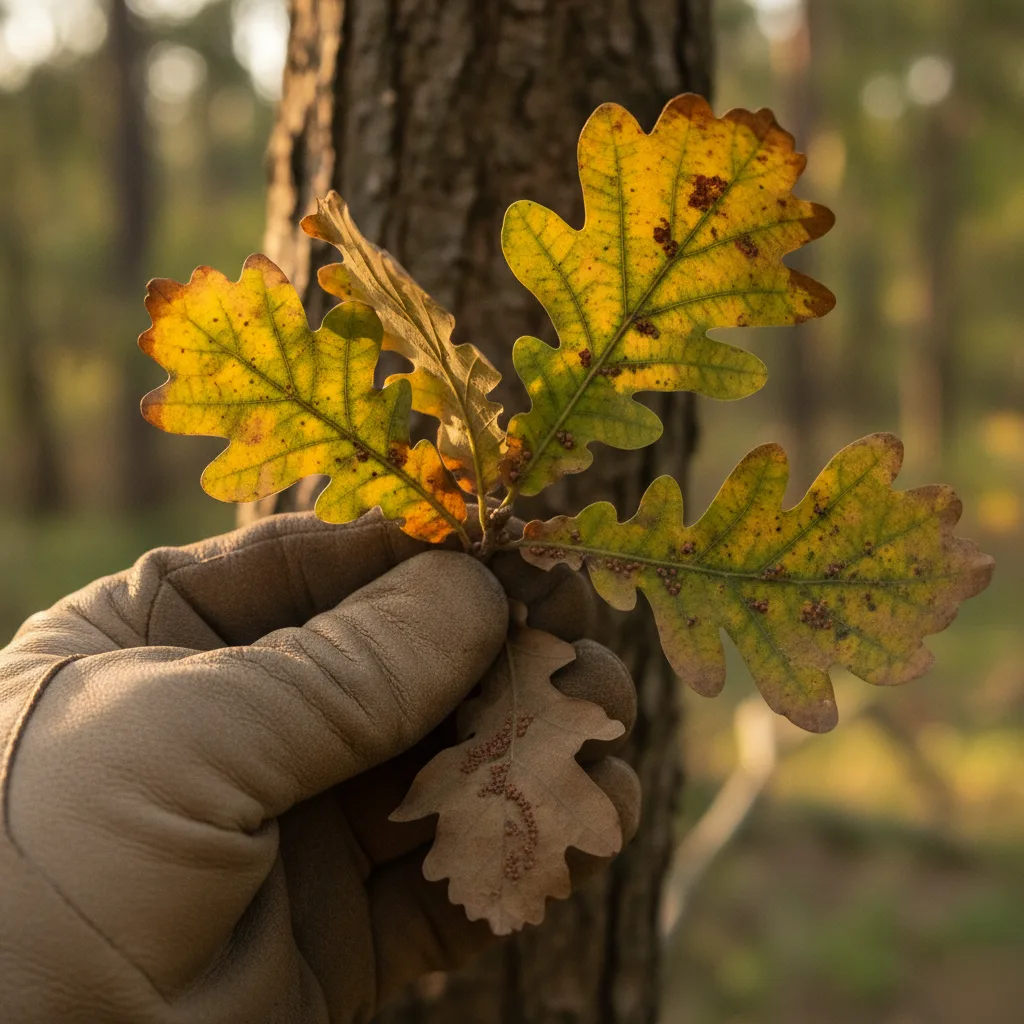
- Leaves that yellow, drop early, or thin out on one side of the canopy while the rest appears normal
- Mushrooms or shelf fungus visible at the base of the trunk or along exposed roots
- Bark that is splitting, peeling, or oozing sap in new areas
- Dead branches visible high in the canopy while lower limbs remain green
- Small holes in a distinct pattern, piles of sawdust at the trunk base, or visible bark beetles
- A trunk that leans more than before, or roots lifting out of the soil
Laurel oaks and water oaks, both common in older Tampa neighborhoods, are especially susceptible to internal rot. This rot shows almost no external signs until a storm exposes its weakness. This internal decay is a significant concern for us. A tree can appear green and healthy one week. The next, it might drop a major limb, especially after the wind and rain of hurricane season here.
Not sure if what you’re seeing counts as a real problem or just normal seasonal stress? This is a common and fair question. Sandy Tampa soil drains quickly, so drought stress can mimic disease symptoms like a thin canopy, curling leaves, or slow growth. The distinction matters. Guessing incorrectly can lead to losing a tree unnecessarily or keeping a hazardous one too long.

For faster or immediate service during business hours, please call us directly at 813-837-3992
Common Diseases Behind Tampa's Sick Trees
Tampa’s heat and humidity are ideal for growing trees. They also create perfect conditions for the fungi and bacteria that cause tree diseases. Early detection and treatment begin with proper identification, as guessing wastes critical time the tree may not have.
Frequently, when we receive calls about a “dying” tree in Tampa, it turns out to be one of a handful of usual suspects. We observe this pattern every week.
- Root rot fungi – common in Tampa’s sandy, poorly draining soil after heavy summer rains. It appears as thinning leaves and a soft, spongy trunk base.
- Laurel wilt – a serious threat to laurel oaks and red bays, spread by the ambrosia beetle. Leaves wilt rapidly, often within weeks.
- Ganoderma butt rot – a fungal disease that hollows out the base of live oaks, one of Tampa’s most planted street trees. Shelf-shaped mushrooms at the trunk base are the key indicator.
- Bacterial leaf scorch – causes slow decline and browning leaf edges, often mistaken for drought stress along Bayshore Boulevard’s older oak canopy.
- Anthracnose – a leaf and twig fungus that flares up during Tampa’s wet, humid spring stretch.
Most of these diseases present similar symptoms from the ground. Wilting, thinning, and discolored leaves often look alike. This is exactly why a proper diagnosis matters more than a quick guess.
Some of these conditions can be managed for years with proper care. Others, like advanced Ganoderma in a mature live oak, indicate that the tree’s structural integrity is already compromised. Making this determination requires expertise you should not shoulder alone.
When a Tree Doesn't Need Disease Treatment
Not every yellow leaf signals trouble. We often receive calls about trees that appear sick but are healthy. Understanding this distinction helps homeowners avoid unnecessary treatment expenses.
Live oaks around Tampa shed a significant amount of leaves every February and March, just before new growth emerges. Homeowners may see their yard covered in brown leaves and worry, but this is simply how the tree renews itself for spring. Spanish moss hanging in your canopy looks dramatic, but it is not a parasite. It uses the tree as a perch and does not feed off it. Sooty mold, the black coating sometimes seen on leaves, usually signals nearby aphids or whitefly, not a tree disease. This coating often washes off or fades once the insect issue is addressed.
Minor sunscald on the trunk, some lichen on older bark, or slight color changes in fall growth flushes also do not require treatment. Normal aging is not a disease.
However, some early disease symptoms look almost identical to normal seasonal stress. This is exactly why guessing is risky in either direction. Treating a tree that is just going through a natural cycle wastes money and can stress it further with unnecessary chemical applications. Conversely, ignoring a tree that is declining because you assumed it was “just the season” can cost you the whole tree.
That’s why we offer a free estimate with a certified arborist on staff. You receive a straight answer instead of a guess. Call J.A. Weaver’s “JAW’S” Tree Service at your convenience and we will tell you whether your tree needs treatment or simply needs time.
Ready when you are – get in touch today.
Call today for a free Estimate. Jaws Tree Service is ready to help.
Storm Season Raises the Stakes for Tampa Canopies
Tampa’s rainy season typically runs from June through September. This is when an unhealthy tree becomes a greater hazard. Heavy, saturated soil weakens root systems already compromised by disease. With added wind gusts from a summer storm, a tree that appeared healthy in May might fail by August.
We receive calls every year right after a storm rolls through. Often, the tree that fell had been showing signs for months. Fungal decay, root rot, canker disease – these do not develop overnight. They build slowly, weakening the wood from the inside while the outside still looks green. A storm simply exposes the pre-existing weakness.
Tampa’s clay-heavy soil in older neighborhoods drains slowly. When several inches of rain fall in an afternoon, root zones remain saturated for days. This extended moisture creates ideal conditions for root rot and other fungal problems, particularly in already stressed trees. A tree fighting disease has less reserve strength to handle wind load or waterlogged soil.
This is why we recommend routine tree inspections before hurricane season fully begins, not after the first named storm appears on the radar. Catching a disease early, before June, allows our team time to treat it or, if the disease is too advanced, remove the tree on your schedule, preventing an uncontrolled emergency.
How a Certified Diagnosis Leads to the Right Treatment
A sick tree does not come with a label indicating its problem. This lack of clear indicators is the challenge. Root rot, lightning strikes, fungal disease, girdling roots, or lethal bronzing in palms can all present with nearly identical symptoms visible from your home: yellow leaves, a thinning canopy, or a branch that appears suddenly weakened. An incorrect guess can lead to wasted expense on the wrong solution, allowing the actual problem to worsen.
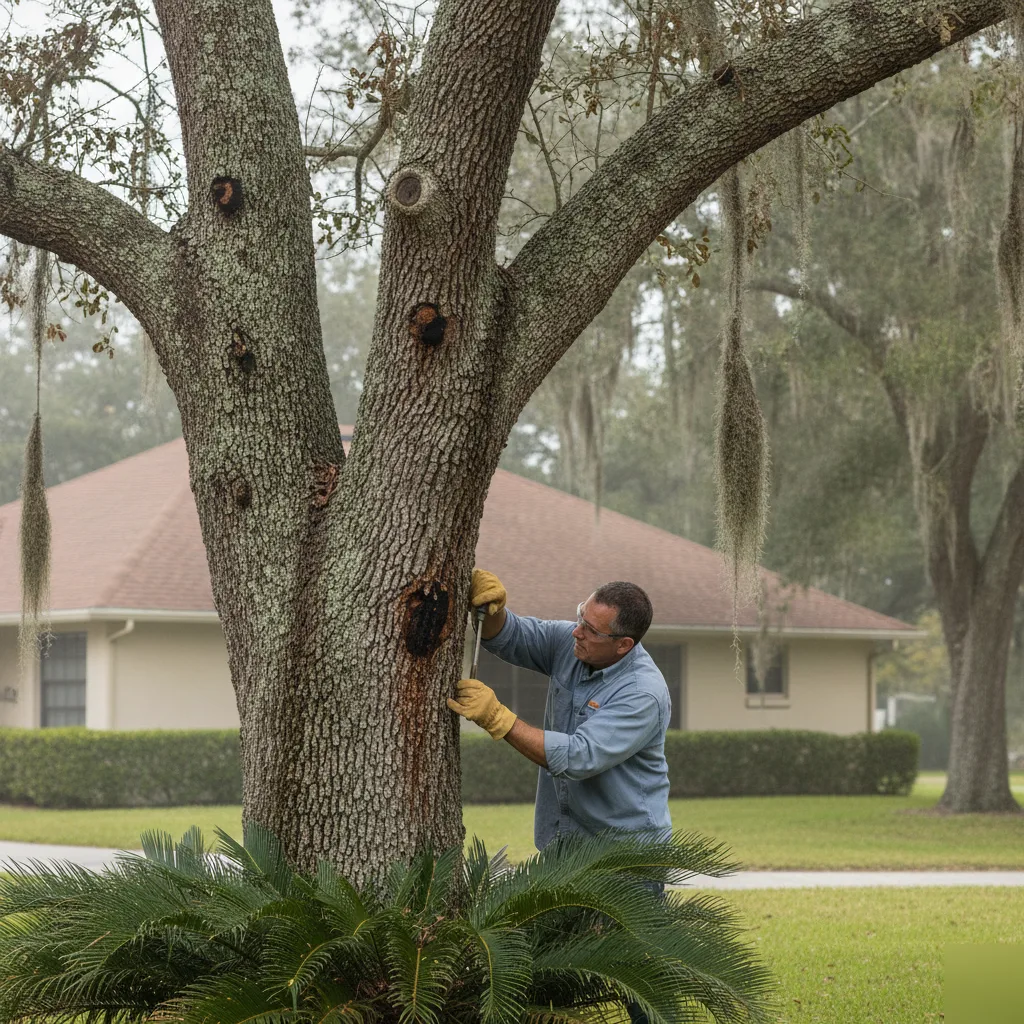
Getting this right requires looking beyond the obvious symptoms. James A. Weaver, our ISA Certified Arborist (ISA # SO-0312A) and the first ISA Certified Arborist in South Tampa, inspects the site thoroughly before any work begins. In neighborhoods with older live oaks planted close to sidewalks and driveways, we often find compacted soil restricting the root zone, rather than a disease. This dramatically alters the approach to a treatment plan.
Our diagnostic process typically involves:
- Inspecting the canopy, trunk, and root flare for patterns, not just isolated damage
- Checking soil condition and drainage around the base
- Identifying pests, fungus, or decay through direct observation
- Aligning findings with a treatment strategy tailored to the specific tree and site
- Setting a follow-up timeline to confirm the treatment is working
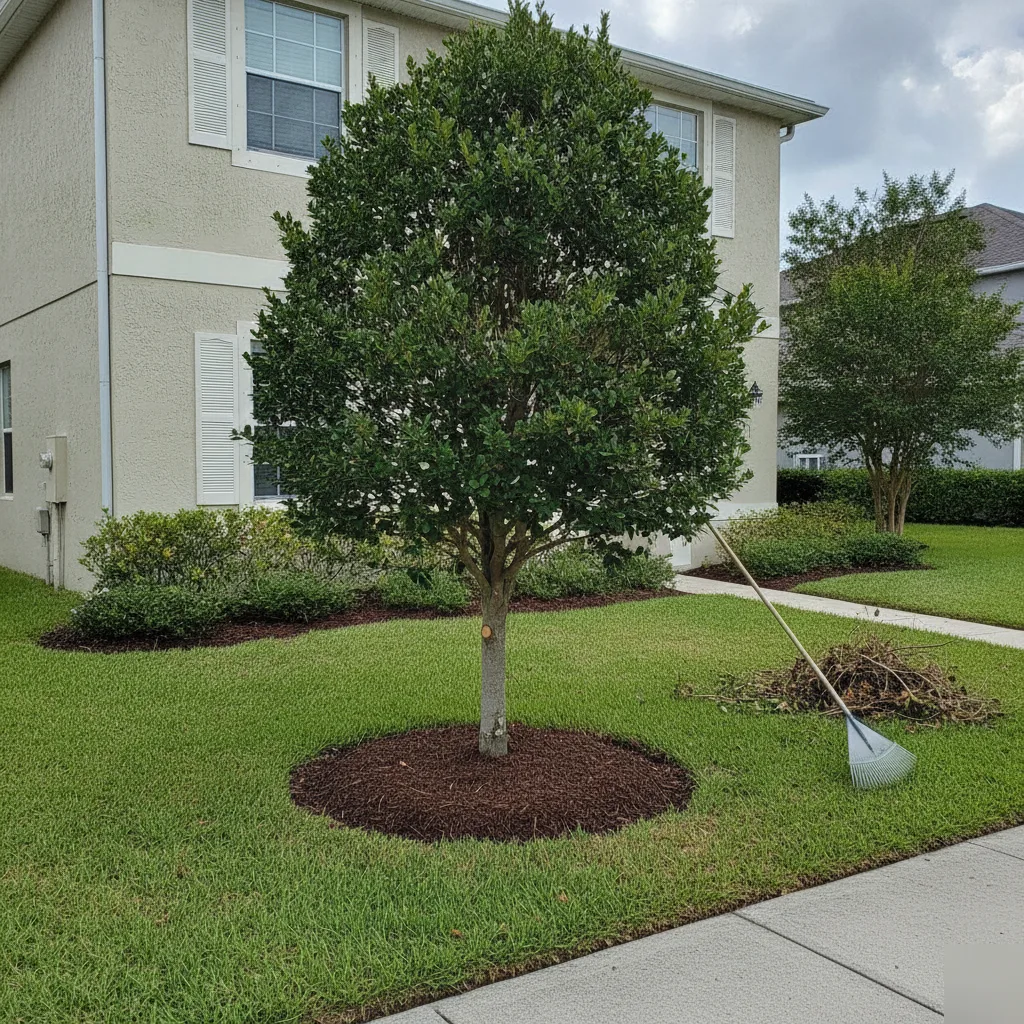
Skipping the initial inspection makes all subsequent actions speculative. We have seen trees “treated” for disease that were simply stressed from nearby construction work, and the prescribed treatment proved ineffective.
This is why the diagnosis must always precede treatment; it forms the foundation of the entire care plan. Correct diagnosis allows effective treatment. An incorrect diagnosis wastes precious time the tree cannot afford to lose.
Frequently Asked Questions
How fast can someone come look at a tree I’m worried about?
We schedule most diagnosis visits within a few days of your call, sooner if you mention storm damage or a sudden change like wilting leaves. Tampa’s rainy season from June through September brings a spike in urgent calls, since saturated soil can turn a slow-declining tree into a fallen one fast. If you notice sawdust piles, oozing bark, or a new lean, tell us right away. That helps us prioritize your visit and get a certified arborist to your property quickly.
What happens when the arborist checks my tree?
The arborist walks your property, looks at the canopy, trunk, and soil around the roots, and checks for patterns like one-sided leaf drop or shelf fungus at the base. We look at the whole picture, not just one symptom, since diseases like root rot and drought stress can look alike in Tampa’s sandy soil. You’ll get a clear answer about whether your tree needs treatment, monitoring, or nothing at all. There’s no guesswork involved, just a straight assessment.
What are the most common tree diseases you see around Tampa?
The ones we treat most often are root rot fungi, laurel wilt, Ganoderma butt rot, bacterial leaf scorch, and anthracnose. Ganoderma is especially common in live oaks, one of Tampa’s most planted street trees, and shows up as shelf-shaped mushrooms at the trunk base. Laurel wilt moves fast and can kill a laurel oak within weeks. Each disease needs a different response, so proper identification always comes before any treatment plan.
Can a tree look fine but be dying inside?
Yes, and this is one of the riskiest situations we see in Tampa. Laurel oaks and water oaks in older neighborhoods are especially prone to internal rot that shows almost no outside signs until a storm exposes the weakness. A tree can look green and full one week, then drop a major limb the next after heavy wind and rain. This is why we check the trunk base, root zone, and bark closely, not just the canopy color.
My live oak is dropping tons of leaves in early spring. Is it dying?
Probably not. Live oaks around Tampa naturally shed a large amount of leaves every February and March, just before new growth comes in. This normal cycle often gets mistaken for disease, especially when a whole yard fills with brown leaves overnight. Spanish moss and minor lichen on older bark are also normal and not signs of illness. If you’re unsure, a quick check can tell you whether it’s seasonal or something worth treating.
Why does Tampa’s rainy season make tree disease worse?
Heavy summer rain saturates root zones for days, especially in older neighborhoods with clay-heavy soil that drains slowly. This extended moisture creates ideal conditions for root rot and other fungal problems in trees that are already stressed. Diseases like canker rot and fungal decay build slowly from the inside, so a storm often just exposes weakness that was building for months. Catching these signs before June through September gives your tree a much better chance.